



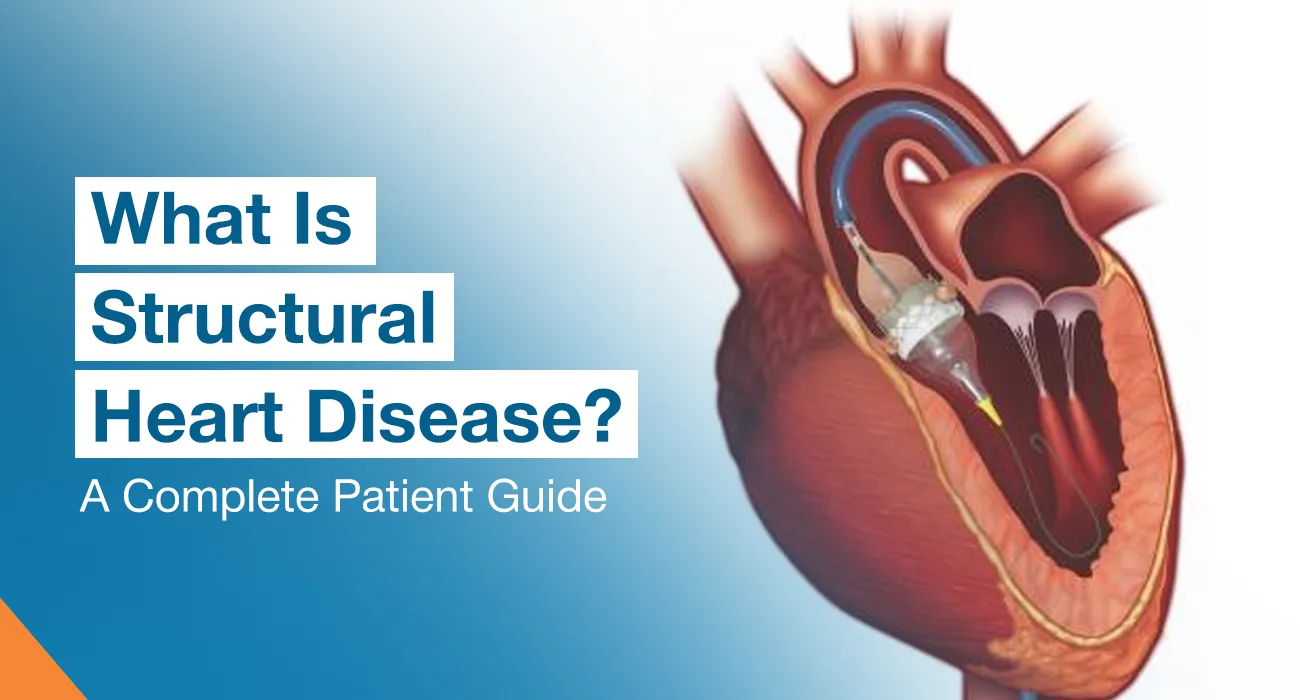
What Is Structural Heart Disease? A Complete Patient Guide
04/24/2026
Symptoms like chest pain, tightness or pressure; high blood pressure; shortness of breath, and swelling in the abdomen, ankles, or feet demand timely medical attention. Because these symptoms can indicate structural heart diseases, these are conditions that affect your heart’s valves, walls, chambers, or muscles. Structural heart disease can lead to other health problems over time if left untreated, including heart failure, stroke, etc.; hence, consult the best cardiologist near you for the right care.
What Is Structural Heart Disease?
Structural heart disease is a broad term for any condition that affects how your heart is built and how it functions.
It means there is an issue in the structure or function of the valves, walls, chambers, or muscles in your heart. People can be born with structural heart disease (Congenital), or it can develop as they age.
Is All Structural Heart Disease Serious
Not all structural heart disease is immediately or equally serious. The severity can range from mild and asymptomatic to life-threatening based on the type of condition.
Is Structural Heart Disease Curable?
Some types of structural heart disease won’t need treatment. But a doctor will need to monitor the condition throughout your lifetime.
Some types are not always “curable,” but many forms can be effectively corrected or managed, particularly through Minimally Invasive Heart Surgery when treated early.
What Are Examples of Structural Heart Disease?
Here are the examples:
| Category | Specific Types/Subtypes |
| Valve Diseases | Aortic stenosis, aortic regurgitation, mitral regurgitation, mitral stenosis, tricuspid regurgitation, tricuspid stenosis, pulmonic stenosis, pulmonic regurgitation, paravalvular leak |
| Congenital Defects | Atrial septal defect (ASD), ventricular septal defect (VSD), patent foramen ovale (PFO), patent ductus arteriosus (PDA), coarctation of the aorta, coronary artery fistula, heart chamber openings (e.g., atresia), valvular anomalies at birth |
| Cardiomyopathies | Hypertrophic cardiomyopathy (HCM), other forms affecting the heart muscle |
| Other Structural Issues | Left ventricular aneurysm, left ventricular hypertrophy, Marfan syndrome, myocarditis, aortic aneurysm |
Example of Adult Structural Heart Disease
- Aortic stenosis
- Mitral regurgitation
- Mitral stenosis
- Tricuspid regurgitation
- Hypertrophic cardiomyopathy (HCM)
- Persistent congenital defects
- Paravalvular leaks
Example of Pediatric Structural Heart Disease
- Atrial septal defect (ASD)
- Ventricular septal defect (VSD)
- Patent ductus arteriosus (PDA)
- Mild pulmonary valve stenosis
- Bicuspid aortic valve
Causes of Structural Heart Disease
There are two types of causes:
1. Congenital Causes
Can develop during fetal development due to genetic factors, maternal conditions or unknown aetiology.
2. Acquired Causes
Can develop over time due to:
- Aging
- Alcohol or drug addiction
- Aortic aneurysm
- Autoimmune disease
- Cardiovascular disease or heart attack (myocardial infarction).
- Diseases that damage the heart, such as amyloidosis, hemochromatosis or sarcoidosis
- Endocarditis (inflammation of the inner lining of your heart valves and chambers (endocardium))
- Diabetes and thyroid disease
- High blood pressure (hypertension)
- High-dose radiation exposure
How Is Structural Heart Disease Diagnosed ?
During pregnancy, your doctor may use a fetal echocardiogram to detect structural heart disease.
In children and in adults, the best cardiologist in a healthcare centre like Eternal Hospital can do the following tests for an accurate diagnosis:
- Hear a heart murmur when they listen to your heart with a stethoscope.
- Cardiac catheterisation.
- Coronary angiogram.
- Echocardiogram.
- Electrocardiogram.
- Exercise stress test.
- Holter monitor.
- Imaging tests (a chest X-ray, CT scan or cardiac MRI).
Can Structural Heart Disease Be Reversed?
It cannot be fully reversed in most cases, but the symptoms can be managed effectively through proper treatment.
Structural Heart Disease Treatment Options
Certain types of structural heart disease won’t require treatment but need monitoring throughout a lifetime.
Other types may require further treatment based on the severity of the condition
| Category | Treatments | Examples |
| Medications | Symptom management | Beta-blockers, ACE inhibitors/ARBs, diuretics, anticoagulants, and antiplatelets to control blood pressure, rate, clots, and fluid. |
| Minimally Invasive Procedures | Valve repair/replacement | TAVR (aortic), MitraClip (mitral regurgitation), transcatheter tricuspid/pulmonic valves, alcohol septal ablation (HCM), PFO/ASD/VSD closure. |
| Surgical Interventions | Open-heart repair | Valve repair/replacement, myectomy (thickened muscle removal), heart transplant for end-stage cases. |
| Monitoring/Lifestyle | Non-invasive | Regular echocardiograms, diet/exercise, smoking cessation to slow progression. |
Conclusion
Structural heart disease can affect anyone regardless of their gender, ethnicity or race. Based on the issue, it may be more common in individuals with a family history of structural heart disease. These heart-related structural diseases make it more difficult for your heart to pump blood to the rest of your body and can worsen if they remain untreated. Hence, timely diagnosis and treatment are necessary for a long-term healthy life.
When to Consult Your Best Cardiologist Near You in Jaipur
Book an appointment with your cardiac doctor if you are constantly experiencing the following symptoms:
- Persistent chest pain or crushing pressure, despite proper rest and taking medicine.
- Difficulty breathing while performing daily activities or during rest.
- Fainting, severe lightheadedness, or dizziness.
- Irregular heartbeats.
- Unexplained swelling in the legs, feet, or belly.
Get expert advice by calling us at+91-9549158888
Eternal Hospital is the preferred hospital for a reason because of our accreditation and affiliations.
- Awarded the gold seal by JCI
- Affiliated with Mount Sinai Hospital
- Facilitated with ACC for excellence in heart care
- Accredited with NABH for strict adherence to quality
- Accredited with NABL for testing and calibration laboratories
- Our Address: Eternal Hospital, 3 A Jagatpura Road, Near Jawahar Circle, Jaipur 302017
FAQs
Q1: How does living with structural heart disease look?
A: Living with structural heart disease involves ongoing symptom management, regular monitoring, addressing underlying causes, and healthy lifestyle modification to maintain quality of life.
Q2: How to prevent structural heart disease?
A: Congenital structural heart disease cannot be fully prevented. However, acquired types can be mitigated through lifestyle and medical management. Maintain a healthy weight, go for regular health screenings, and avoid tobacco and excessive alcohol for a healthy heart.